The Greatest Can't Always Be Measured
My dedication to R9. Man was so good that God himself had to nerf him.

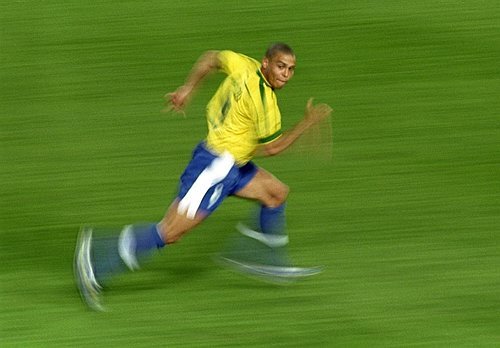
This is not the typical Axis Strategy Labs article. Today, I am stepping away from my usual way of writing for a moment and simply paying my respects to my favourite football player of all time: Ronaldo Nazário, O Fenômeno.
My memory bank is filled with so many little quotes and so many different moments. I suppose that is always a reminder of the accumulated experiences we have over different things, it's a gift and a curse if you ask me, but as they say, you need to know where you are coming from to know where you are going.
Those who know me know about my love for football. Real Madrid and Brazil have long been my favourite teams, and that will probably never change. My son will definitely have no choice but to suffer and celebrate with his father, something my father refused to do with me, maybe because my choice of teams disappointed him lol. But we shall not repeat those sins, as young Jimmy will be groomed young. 😂
And if you ask me about the players I have enjoyed watching, the list is long. I have watched some incredible footballers across different generations.
But for me, Ronaldo El Fenômeno remains the greatest player I have ever watched.
Today, 18 September, is Ronaldo's 50th birthday. He retired almost 15 years ago, and yet I still do not think I have seen anyone play football quite the way he did.
And whenever conversations turn to who is the GOAT, or who the greatest player is, so many things get mentioned.
Trophies.
Goals.
Longevity.
Numbers.
There is a famous saying I always refer to in my chats with friends when we argue:
Men lie, women lie, numbers don't.
But do numbers always tell the full story?
That is where Ronaldo comes in for me.
Numbers matter. But they are not everything.
Trophies and goals are usually the main statistics people reach for when looking at a football GOAT.
And there is nothing wrong with that.
Numbers give us something tangible. They give us a way of comparing players, careers and achievements.
But numbers are not the only way of understanding football.
Sometimes they tell you what happened, without completely explaining what it felt like to watch it happen.
That distinction matters to me when I think about Ronaldo.
Because if football greatness is reduced purely to longevity, goals, trophies and career totals, then there will always be players whose numbers appear stronger.
That is not the argument I am trying to make.
My argument is simply that greatness cannot always be completely measured that way.
There are things the numbers cannot capture.
The fear a player created. The excitement when he received the ball. The feeling that something could happen every time he started running towards goal. The beauty of watching somebody do things that did not seem normal. And that is how I remember Ronaldo.
You Had to Watch Him
Ronaldo represented the number 9 position, but he was different from what people traditionally expected from the position. He could play with his back to goal, and also just as easily beat an offside trap with his pace. Despite this, no defender or opposing player wanted him to receive the ball to feet and turn at them, because he would either run past you or dribble you. There was little you could do against him, especially in a one-on-one situation. It didn't matter whether you were an outfield player or a goalkeeper, because at the end of that run? He could finish.
It's said there has been no other player in world football who had a combination of physical and mental attributes the way he did: speed, power, precision and technical ability.
He understood the position, but he also seemed capable of doing things outside what you expected from a number 9.
I can mention many moments, but I remember one from some of my initial memories of him. I got home, and there used to be a program called Gillette World Sport. Those kinds of moments where it's like I was placed at the right place at the right time, they showed a clip of him, and the commentary was "Ronaldo has done it again," scoring a goal after going past several defenders like it's nothing. This was him at Barcelona, not even peak Ronaldo, but the world got so accustomed to him scoring "impossible" goals, the way they were used to Mike Tyson first-round knockouts. This was not normal.
This is one of the reasons I struggle when greatness is discussed only through numbers.
Some players have to be seen. Look back at his performance and goal versus Lazio in the UEFA Cup: the run, the composure, and the dribble past the keeper through just body movement, that was Ronaldo in full motion. Keeper on the floor, defenders trying to catch up to inevitability, and Ronaldo running towards the corner flag with his trademark celebration. Absolute beauty.
Some Players Arrive at the Right Time in Your Life
Ronaldo made me love football, made me play football, and maybe that is part of why certain players stay with us. It is not only who they were. It is who we were when we watched them.
Ronaldo arrived at a time when football still felt magical, and I do not think it's just to me. Before every moment was clipped, replayed, and reduced to statistics within seconds, there were moments you had to wait for, discover, remember, and sometimes even retell. I have watched and saved so many clips of his, because till today I am in awe.
That is why some of these memories remain so vivid. The Gillette World Sport clip. The impossible runs. The way commentary itself seemed to change when he got the ball. The sense that something could happen before anything had actually happened.
And maybe that is what makes certain players feel larger than the game itself. They become tied to a period of your life. To where you were. To who you were. To how football made you feel then.
Ronaldo is that player for me.
The Football He Played in Was Different
There is another part of these comparisons that I think sometimes gets lost: eras are different. The football Ronaldo came into was not exactly the football we watch now. Tackling was different, harsher, harder, because the physical side of the game was different. Players were not as protected as they are today, and therefore they suffered more. Sports science, recovery, medical support and the way players are managed have developed enormously. None of that means players today have it easy, or that previous generations were automatically better. But I am saying that comparing careers across generations as though the circumstances were identical is difficult. But if you pause and look at goalscoring at the time, players and teams didn't score as many goals as now, but if you look closer, he was posting Messi and Cristiano-level numbers in his era: 47 goals in 49 appearances. This was not normal.
Ronaldo's talent was already undeniable from a young age. And what he became, especially at his peak, happened within the footballing environment of that time.
Ronaldo, just like so many greats, has so many controversial stories to him, even theories, but I would like you to consider one. In 1994, Brazil had so many attacking talents. When selecting the squad, Parreira already had his four options for the striking position, but the 17-year-old Ronaldo at the time impressed him so much that he selected him as a fifth option, something unheard of at the time for a 22-man squad. This even brought so much excitement to the Brazilian nation, as they wanted to see what he would do. He never played a single minute, and, controversially, unofficial accounts say this was because Pelé did not want the youngster to match him.
And then there were the injuries.
This, perhaps, is where the argument about measurement becomes even more complicated.
Ronaldo's career was interrupted, very interrupted. There were moments when his body simply did not allow his talent to continue uninterrupted. This goes back to my point on sports science, as I do believe he would have been better managed now, but back then, especially in a rough and competitive Serie A, managers could not afford to not have him on the pitch despite his condition.
And yet he came back.
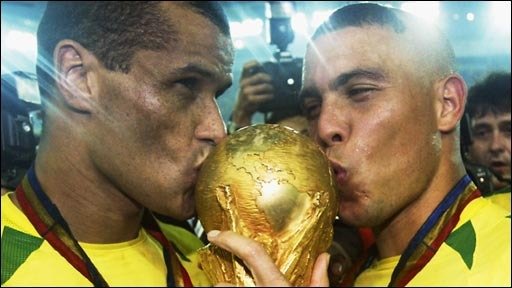
Ronaldo missed close to two years of competitive football at the peak of his powers, when his knee gave in on him in '99. I remember watching the news on CNN and feeling so bad. About six months later, on the very same CNN, after hearing the hype of him making a return to the pitch, I remember the news broadcast stating that six minutes into the excitement of his return, his knee gave in again. I remember watching the news, and I am not ashamed to say I cried watching him on the floor writhing in pain. But there is beauty in his story, because everyone loves a comeback story, and in 2002, as Ronaldo fans, we were vindicated. I have a lasting memory of my friend running out of the house, celebrating on his mom's car bonnet when Ronaldo scored the second goal, shouting expletives at a few Ronaldo haters. Watching him bounce up and down on that bonnet made me so happy, knowing I was not the only one who felt so much happiness and pride for that moment. It will never be taken away from me. (The times, memories are beautiful, lol.)
For me, this matters when people look backwards and compare totals.
Because the numbers tell you what Ronaldo ultimately achieved.
They cannot tell you what those numbers might have looked like without the interruptions.
And perhaps they do not need to. The point is not to create imaginary statistics for him. The point is simply to acknowledge that the final number is not always the complete measure of the player.
Ask the People Who Saw Him
One thing that has always stood out to me is the respect Ronaldo receives from football people themselves, players and fans alike.
Players who played with him, played against him, defenders who had to stop him. People who understood what they were looking at.
From the French defenders Desailly and Thuram talking about their struggles trying to stop him, and trying to make a plan for him in the '98 final, to Italian greats such as Maldini, Nesta and Cannavaro stating the same about the struggle of trying to mark him, and how none of them wanted to be left alone with him. These were world-class defenders for two of the biggest national teams at the time, but all said the same thing. Even years later, when he was not as explosive, Rio Ferdinand and Materazzi both said the same thing: they never liked playing against him. I remember a commentator saying, "Even a 75% fit Ronaldo is better than any other player in the world."
Even a 75% fit Ronaldo is better than any other player in the world.
There is something powerful about that.
Then listen to the attackers and teammates. Zidane. Owen. Ronaldinho. Rivaldo. Roberto Carlos. Figo. Pep Guardiola. Players who had seen greatness up close and still spoke about Ronaldo as something different. Or even the managers: Bobby Robson, Jose Mourinho, Hector Cuper, Scolari, Mário Zagallo.
Statistics are evidence. But surely the testimony of people who experienced the player at close range is evidence too. Not a replacement for numbers. Another form of evidence. Just as those who never played with him but saw him, Messi, Salah, Lukaku, etc.
Football Was Fantasy Before Fantasy Football
I also think part of what made that era special was the way we experienced football. Today we have Fantasy Football games where you can construct a team of players you choose. But growing up, part of the fantasy was simply imagining those teams ourselves. We would argue about who belonged in the best eleven, imagine combinations and debate who was better. Football was already fantasy. Ronaldo belonged naturally in those conversations because he represented something beyond simply being effective.
He made football beautiful to watch. There used to be matches such as World XI vs Europe XI. The greatest players at the time would play; I would urge those who can find the clips of those games to watch them, or even just clips of them. Him being the best player on the pitch was very obvious.
There is nothing more fantasy than a player whose statistics show he scores close to 21% of his goals by dribbling past the keeper. While most strikers who get one-on-one opportunities simply finish off the chance, with Ronaldo, this was just the beginning of the chance, and that says quite a few things about him: his movement, speed, dribbling, technique, and football IQ were off the charts. If this were a simple task, more strikers would have been doing it. 88 goals scored while dribbling a keeper is an insane statistic. The fact that this is a number is crazy, as it means he did it frequently enough that someone paused to note it. 21 per cent is crazy. No one has such a statistic attributed to them, not to say there aren't players who dribble past keepers, it's the degree he did it at which, once again, just points to his greatness.
The Greatest Can't Always Be Measured
I do not know if I have written a completely persuasive case for Ronaldo being the greatest footballer ever, and I don't think I need to. That is not really what this is.
This is me paying my respects to the footballer who made me love the beautiful game the way I do. Joga Bonito (make the ball smile), oh boy did he. Look at the Nike ads for that era, you will note that football was played by footballers, players who played professional football but would be equally adept in shining in street soccer. It was a beautiful time.
You can measure goals, trophies, appearances, longevity. They all matter. But I do not know how you measure the excitement of seeing him receive the ball, the fear he created in defenders, or the anticipation that something extraordinary was about to happen. Watch the BBC La Liga commentary, and once again this is past his peak, but what they would say about him and that Madrid team. Watch what Beckham says about watching him play in training, or playing with him in competitive matches. I certainly do not know how you measure the memories a player leaves behind decades later, and maybe that is the point.
But to me, the tangibles and the intangibles need to play a part: the peer commentary, the feeling while watching him, and, as said, the eye test. This article is not just about Ronaldo. Look at players with similar attributes to him in this day and age, Mbappé being the closest to him, but watch how he plays the number 9 position, and look back at Ronaldo. You will maybe understand just how the attributes I have mentioned make sense, and this is no slight to Mbappé. But greatness is what it is: greatness. Talent is what it is: talent.
Happy 50th birthday, Ronaldo. El Fenômeno.
Founder, author, and curator of The Strategy Lens. He writes about strategy, leadership, marketing, technology, sport, and the lessons life tends to teach the hard way. He is also developing Axis Strategy Lab, an advisory venture extending these ideas into practice.
More about James →